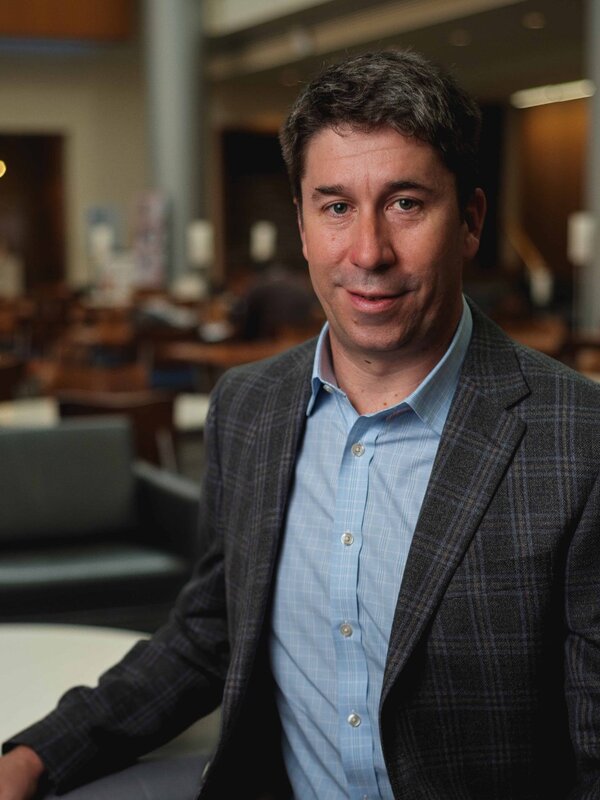
Real Estate Endowed Professor of Finance & Director, Certificate in Financial Planning
Gatton College of Business and Economics, University of Kentucky
My research uses proprietary and novel datasets to study financial intermediation, with a focus on advisor misconduct, regulatory enforcement, and the role of geography in financial markets. This work has been cited in SEC rulemaking and featured in the Wall Street Journal, Financial Times, Bloomberg, and NPR.
The Wall Street JournalFinancial TimesBloombergNPRHarvard Business ReviewFast CompanyBarron'sProMarketFinancial Planning
Regulatory Impact
SEC Rulemaking
Cited in Regulation Best Interest
Research on financial advisor misconduct was cited by SEC Commissioner Robert Jackson in his public statement on the Final Rules governing Regulation Best Interest (Reg BI), which requires financial professionals to act in their clients' best interest.
SEC Engagement
Presented to SEC Division of Economic and Risk Analysis
Findings on how fraud spreads through career networks were presented directly to the SEC's research division, informing the Commission's approach to identifying high-risk advisors and monitoring misconduct patterns.
Open Data
Public Misconduct Database
Constructed and publicly released a comprehensive database of investment manager fraud using FOIA requests, enabling researchers, regulators, and investors to study misconduct patterns. Available at the UK data repository.
Press Coverage
Watching the Watchdogs in the Press
Smartphone geolocation research tracking SEC interactions with firms was covered by the Financial Times, Bloomberg's Money Stuff, Fast Company, and ProMarket.
Advertising by investment advisory firms increases local stock market participation, but only where the firm has a physical office. Unlike other industries, there are no between-firm spillovers.
Exploiting variation in household exposure to financial advertising along Designated Market Area (DMA) borders, we find increased advertising by investment advisory firms leads to greater stock market participation. This relationship is concentrated in areas where the advertising firm maintains a physical presence, and unlike advertising in other industries, we find limited evidence of between-firm spillovers.
Unexpected deaths of branch managers trigger a sharp, persistent decline in advisor misconduct. Supervisors with accumulated soft information were facilitating misconduct, not constraining it.
Using the sudden deaths of financial advisory branch managers as exogenous disruptions to the accumulated soft information between supervisors and advisors, we find that these deaths trigger a sharp decline in advisor misconduct that persists for several years before gradually returning to prior levels. These findings challenge the intuitive notion that more informed supervisors will curb unethical behavior.
Misconduct by Insurance Agents
with Longwei Cheng, Steve Dimmock, and Jesse Ellis
Past misconduct predicts future misconduct by insurance agents, but the labor market barely responds. Complaints matter mainly in Texas, the one state that posts them publicly.
We examine whether misconduct by insurance agents is disciplined by the labor market. Past misconduct strongly predicts future misconduct, making it an informative signal, yet the labor market response is limited. Complaints modestly increase industry exit and insurer-appointment terminations, but agents often replace lost appointments, leaving their access to insurers largely unchanged. The response to complaints comes almost entirely from Texas, the one state that posts complaints publicly, while complaints that are visible only to regulators generate little response. Regulatory sanctions increase exit only when they revoke a license, and even revoked agents usually remain in the industry, because licenses are issued state by state. Among agents registered as both insurance agents and brokers, insurance misconduct has stronger labor market consequences in the brokerage market than in insurance, even though the agent and the conduct are the same. The findings show that informative misconduct signals produce weak discipline unless institutions make the misconduct visible to the market or a firm is responsible for acting on it.
with Steve Irlbeck, Marc Painter, and Guangli Zhang
Using smartphone geolocation data, we show that many SEC visits to firm headquarters occur outside formal investigations. Visits predict negative abnormal returns and a chilling effect on insider trading.
SEC oversight is confidential by design, yet insiders can learn of it before investors. Using de-identified smartphone geolocation data, we detect physical firm-SEC interactions hidden from public records. These interactions predict abnormal returns of about -4% over three months, even before or outside a formal investigation, and bid-ask spreads widen, consistent with adverse selection. Financial firms under routine examination show no comparable effect, distinguishing information from regulatory presence. Around interactions, insiders cut selling by 24%, yet those who do sell avoid losses of 6%, concentrated among opportunistic, not routine, traders. Confidentiality protects investigations but may advantage the insiders it monitors.
During the IPO quiet period, underwriters' views still reach retail investors through their local financial advisors. Buying tracks the geography of the syndicate's advisor workforce and fades once formal research is published.
During IPO quiet periods, regulation restricts underwriters from publicly disseminating their views precisely when investor demand is most sensitive to them. Using retail trading data from a discount brokerage unaffiliated with any underwriter, we find that quiet-period buying is significantly higher in cities where the IPO's underwriters employ financial advisors. The effect concentrates among syndicate members whose analysts subsequently initiate coverage (strongest when those forecasts are optimistic), intensifies where local advisory cultures are more aggressive, and disappears once formal research becomes public. The quiet period does not stop underwriter views from reaching retail investors; it privatizes access to them.
Essential but Not Sufficient: Internet Essentials and the Barriers to Financial Inclusion
with Tian Qiu
Subsidized broadband for low-income households raises employment, credit market participation, and savings. Stock market participation does not respond.
We study how internet access affects financial inclusion among low-income US households using Comcast's Internet Essentials program. Combining a triple-difference design with data from the ACS, CPS, Experian credit bureau, and IRS, we find that subsidized broadband increases employment, expands credit market participation from search through acquisition to management, and increases savings. Equity market participation does not respond. The pattern is consistent across four independent data sources and robust to a range of sensitivity analyses. We interpret the results through a distinction between frictional barriers that technology can reduce and structural barriers that persist regardless of information costs.
Publications
Management Science · Forthcoming (online April 2026)
Being named a Barron's Top Advisor increases assets and accounts, with sharp effects around certification thresholds. Certified advisors subsequently commit less misconduct.
We study third party quality certification in the market for financial advice. Using the Barron's Top Financial Advisors rankings, we find evidence that being named a top advisor increases both assets under management and accounts for individuals and their firms. The effects increase sharply around thresholds for certification suggesting that clients value the certification itself and not solely the underlying quality. After certification, advisors are less likely to engage in misconduct.
Review of Financial Studies · Advance access (September 2025)
Advisors raised in counties with less ethical cultures are more likely to commit misconduct as adults, even controlling for current workplace and location. Childhood exposure has dosage effects.
Using novel data on financial advisors' childhood residences, we show that advisors raised in counties with less ethical cultures are more likely to commit misconduct as adults. Our identification strategy exploits variation in childhood backgrounds among advisors working together in the same branch office in adulthood. Exploiting timing of moves during childhood, we find evidence of dosage effects. Influences are amplified when coworkers come from less diverse geographic backgrounds.
Review of Corporate Finance Studies (2023) · Vol. 12, 906–938
with Chris Clifford and Tian Qiu · RCFS Registered Report: "Finance for the Greater Good"
Minority advisors are underrepresented in the industry and disproportionately serve poorer, racially concordant communities. Racial concordance has only a modest relation with stock market participation.
We examine the role of race and racial concordance between financial advisors and their local community. We document significant differences in stock market participation based on community racial composition, as well as differences in the characteristics of communities served by minority advisors. Notably, minority advisors are more likely to serve racially concordant communities, which tend to be poorer. While minority advisors are more likely to leave the industry, this relation is mitigated among advisors located in more concordant communities.
Review of Financial Studies (2023) · Vol. 36, 409–449
Analysts incorporate local information (measured via satellite imagery of parking lots) into forecasts. Geographic concentration of analyst coverage increases forecast errors and reduces liquidity.
We show that analysts incorporate geographically dispersed information about firms into individual forecasts and that limited analyst geographic diversity adversely affects consensus forecasts and firm liquidity. Using satellite imagery of U.S. retailers' parking lots, we find analysts shade their own forecast in the direction of local car counts.
Advisors whose home values decline commit more misconduct. The effect is stronger for advisors with lower career risk and greater borrowing constraints.
We test whether personal real estate shocks affect professional misconduct by financial advisors. We find a negative relation between housing returns and misconduct. Advisors' housing returns explain misconduct against out-of-state customers, breaking the link between customer and advisor housing shocks.
When the Protocol for Broker Recruiting transferred ownership of client relationships from firms to advisors, advisors invested in credentials, shifted to fee-based models, and customer complaints fell.
We study the effect of a change in property rights on employee behavior in the industry for financial advice. After the Protocol for Broker Recruiting transferred ownership of client relationships from the firm to the advisor, advisors invested in client-facing industry licenses, shifted to fee-based advising, and garnered fewer customer complaints.
Co-workers influence misconduct propensity. Using mergers as exogenous shocks to career networks, we find advisors paired with new colleagues who have misconduct histories are more likely to offend.
We show that co-workers influence an individual's propensity to commit financial misconduct. We identify co-workers' effect on misconduct using changes in co-workers caused by mergers of financial advisory firms. The probability of an advisor committing misconduct increases if new co-workers have a history of misconduct. This effect is stronger between demographically similar co-workers.
Busy independent directors have more reputational capital at stake and are preferred by high-quality funds. Their presence is associated with less fraud and fewer abuses of discretionary restrictions.
We provide the first examination of hedge fund boards and their directors. Busy independent directors are sought after because they have more reputational capital at stake. Funds with busy independent directors are less likely to commit fraud, abuse discretionary liquidity restrictions, or engage in performance-based risk shifting.
with Steve Dimmock, Zoran Ivkovich, and Scott Weisbenner
Tax-driven capital gains lock-in affects governance: funds with larger unrealized gains are less likely to exit before contentious votes and more likely to vote against management.
Differences in accrued gains and investors' tax-sensitivity induce variation in a capital gains lock-in effect. Higher capital gains decrease the likelihood a fund exits prior to contentious votes and increase the likelihood a fund votes against management.
Hedge fund misreporting decreased after a 2004 SEC rule expanded oversight, and increased after the rule was revoked in 2006. Regulatory scrutiny also increased flows and reduced flow-performance sensitivity.
We use SEC rule changes to show that regulatory oversight reduces return misreporting by hedge funds. Differences-in-differences tests show that misreporting decreased after a 2004 rule expansion and increased when funds exited the regulatory system after the rule's 2006 revocation.
How firms allocate ownership to individual managers depends on the distribution of decision rights and the benefits of cooperation.
We show that the allocation of managerial ownership to individuals within firms varies depending upon the joint distribution of decision control and decision management rights. Ownership is higher for managers with both executive and operational responsibilities and when benefits of cooperation are higher.
Greater stock liquidity enables blockholders to discipline managers through the credible threat of selling their shares.
Employing an instrumental variable approach based on the regulatory change of tick sizes, I examine the link between equity liquidity and activism by large shareholders. Liquidity increases the likelihood of block formation. I find evidence that the threat of exit from a block can discipline managers and that this threat is more effective when liquidity is higher.
SEC disclosure data can predict fraud: avoiding the riskiest 5% of firms would have prevented 29% of fraud cases and 40% of dollar losses.
We test the predictability of investment fraud using mandatory SEC disclosures. Avoiding the 5% of firms with the highest ex ante predicted fraud risk would allow an investor to avoid 29% of fraud cases and over 40% of total dollar losses from fraud. We find no evidence that investors receive compensation for fraud risk.
Fišar, Greiner, Huber, Katok, Ozkes & the Management Science Reproducibility Collaboration · W. Gerken, collaboration member
A field-wide audit of nearly 500 Management Science articles; computational reproducibility rose sharply after the journal's 2019 data-and-code disclosure policy.
Training the next generation of ethical financial advisors
As Director of the Certificate in Financial Planning at UK's Gatton College, I lead a CFP Board-registered program that prepares students to sit for the CFP® exam and enter the profession with both technical competence and ethical grounding.
The program works with firms such as Fidelity, Merrill Lynch, and MCF Advisors on shadow days, projects, and hiring, and integrates the lessons of my misconduct research directly into the curriculum.
My path to studying financial misconduct began with a personal experience: watching a family member be taken advantage of by an unscrupulous advisor. That led me to FOIA-request my way into building one of the first systematic databases of the financial advisory industry, and eventually to an engineering-trained approach to studying how fraud spreads through networks, how regulators interact with firms, and how the market for financial advice can be made to work better for ordinary investors.
Education & Professional Designations
PhD, Finance
Michigan State University
2009
CFA Charterholder
CFA Institute
2006
CFP® Professional
CFP Board
2025
MBA
Georgia Institute of Technology
2004
MS, Electrical Engineering
Georgia Institute of Technology
2003
BS, Computer Engineering
West Virginia University
2001
BS, Electrical Engineering
West Virginia University
2001
Career
Professor of Finance
University of Kentucky
2023 – Present
Director, Certificate in Financial Planning
Gatton College, University of Kentucky
2024 – Present
Real Estate Endowed Professor
University of Kentucky
2020 – Present
University Research Professor
University of Kentucky
2025 – 2026
Department Chair
Finance & Quantitative Methods, University of Kentucky